
Reusable or single-use containers: the differences that really matter
When implementing a healthcare waste management system, one of the most important decisions is choosing between reusable and single-use containers. Both solutions enable the safe management of clinical waste, but the differences between them go far beyond the number of uses. Factors such as safety, logistics, sustainability and traceability can influence the choice.
Beyond the Number of Uses
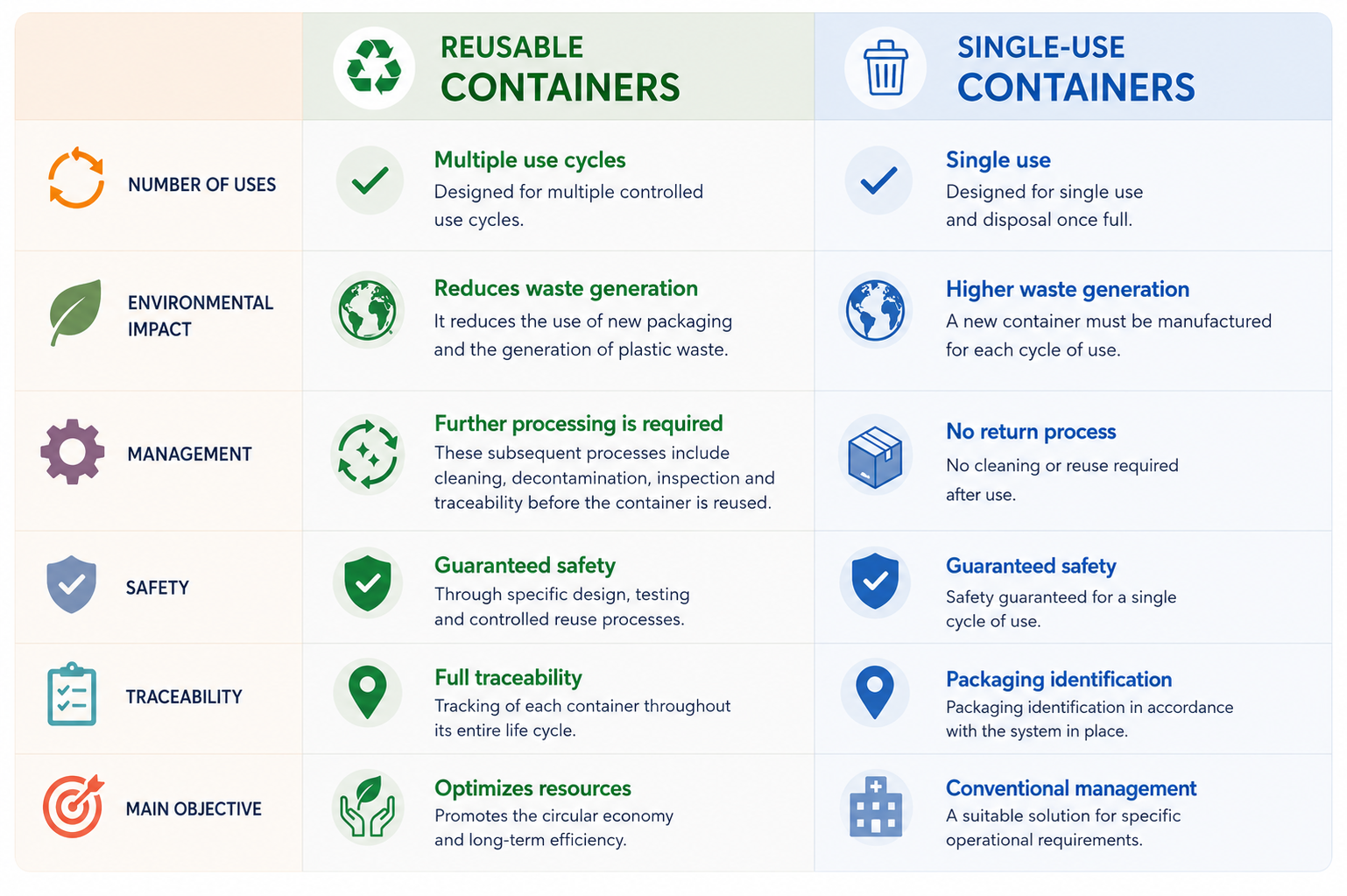
The main difference between the two systems lies not only in the number of times a container can be used, but also in the management model behind each of them.
Whilst a single-use container reaches the end of its useful life after a single cycle, a reusable container has been designed to be reused through controlled processes of collection, cleaning, decontamination and inspection.
In other words, reuse is not simply a matter of using a container several times, but of ensuring that each new use offers the same level of safety as the first.
Environmental Impact
Each time a container is reused, it prevents the manufacture and disposal of a new equivalent container. This helps to reduce the consumption of raw materials, minimise the generation of plastic waste and promote circular economy models, particularly in organisations with high volumes of healthcare waste.
This is why an increasing number of hospitals and waste management organisations are turning to solutions that enable them to reduce their environmental impact without compromising safety or regulatory compliance.
What About Safety?
The safety of a reusable container does not depend on the number of times it is used, but rather on whether it has been specifically designed for this purpose and forms part of a controlled reuse system.
To this end, these containers must pass rigorous strength and safety tests, as well as being integrated into validated cleaning and decontamination processes, quality controls and traceability systems that guarantee they are in good condition before each reuse.
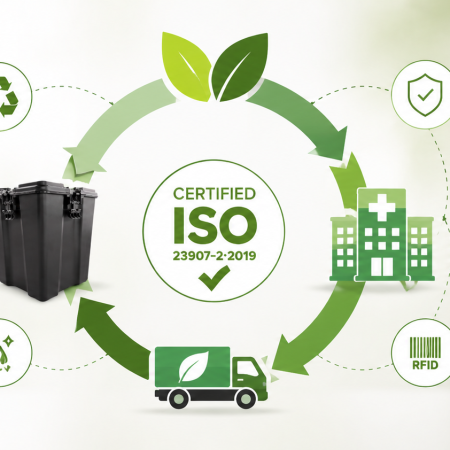
At Sanypick, we have developed reusable containers for biohazardous clinical waste. These include Biotrex R, a reusable container with ADR certification for the transport of dangerous goods, and our new 60-litre reusable container, approved in accordance with the ISO 23907-2:2019 standard, making it the first in the European Union to obtain this approval.
Which Solution Should You Choose?
There is no one-size-fits-all solution for all organisations. The choice will depend on the volume of waste generated, the logistics available, the sustainability strategy and the specific needs of each healthcare facility.
Both single-use and reusable containers can offer safe and efficient waste management when implemented in the right context. Whilst the former stands out for their ease of management, reusable systems can offer significant advantages in organisations with a high volume of activity, where the infrastructure required for their reuse is technically and economically viable.
Ultimately, rather than deciding which system is best, the important thing is to choose the solution that best suits the needs of each organisation, whilst always ensuring safety, regulatory compliance and the efficient management of healthcare waste.